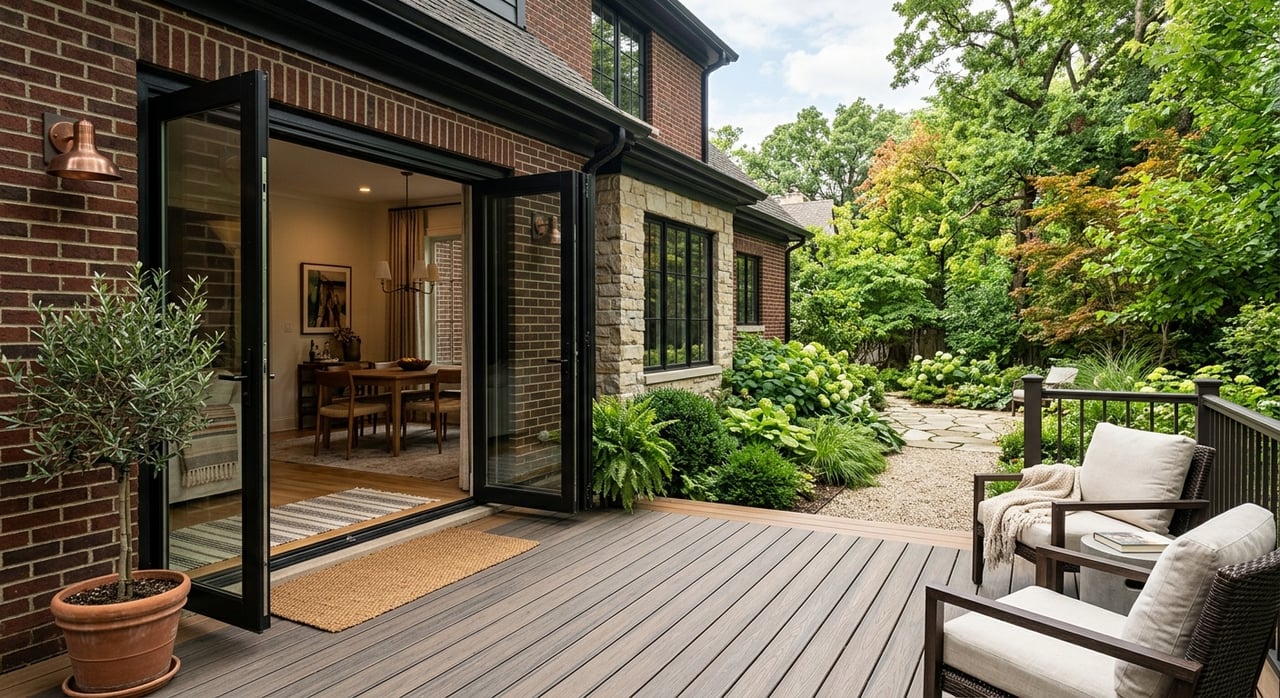
Adams Township Or Cranberry Township: Which Fits Your Lifestyle
June 11, 2026
June 11, 2026
Trying to choose between Adams Township and Cranberry Township? If you are moving within Butler County or relocating to the North Hills area, this is one of those decisions that can shape your daily routine in a real way. The good news is that both communities offer strong homeowner appeal, but they deliver very different experiences when it comes to space, convenience, housing style, and day-to-day rhythm. Let’s dive in.
If you want the clearest snapshot of how these two communities feel, look at population and density. Census QuickFacts estimates show Adams Township has 15,705 residents and about 664.4 people per square mile, while Cranberry Township has 35,244 residents and about 1,445.8 people per square mile.
That gap matters because density often shows up in your everyday life. It can influence how close homes feel to one another, how often you run into retail and activity hubs, and whether your surroundings feel more spread out or more built around convenience.
Adams Township tends to appeal to buyers who want a quieter residential setting with a more open feel. Township planning documents describe Route 228 as the main street and note a rough split between a more rural north and a more suburban south.
That helps explain why Adams often feels less uniform than a large master-planned area. In some parts, you may notice a more spacious pattern of development and stronger separation between residential areas and heavier commercial activity.
Adams Township still centers heavily on single-family detached housing. Its planning documents also show that some districts allow duplexes, townhouses, triplexes, quadruplexes, and planned residential developments, but the overall pattern remains more single-family leaning.
The subdivision ordinance adds another clue. Lots must have at least 50 feet of frontage on a public street, and private-street lots are limited to the Rural Conservation district with no more than four lots on a private street. For you as a buyer, that supports the idea of a lower-density feel in at least part of the township.
Adams has a more corridor-based commercial pattern rather than a large retail-center identity. The township’s comprehensive plan says it intentionally avoided a big-box retail model and worked to keep traffic-generating uses along the Route 228 corridor while protecting residential areas from unnecessary pass-through traffic.
If you prefer a setting where home life feels more separate from shopping traffic, that may be a real plus. It can create a calmer rhythm, especially if your priority is living in a community that feels more residential first.
Adams Township Community Park is a major amenity for residents. Township materials describe it as a 103+ acre park on Three Degree Road, and the splash pad is located on Valencia Road.
The township also points to playgrounds, fields, and other park amenities. Planning materials note 2.8 miles of completed sidewalks and trails, with 4.0 additional miles of secondary trail work planned. If you want access to outdoor space without feeling surrounded by a highly built-up environment, Adams has a strong case.
Cranberry Township tends to fit buyers who want convenience, connectivity, and a wider mix of housing and amenities. The township describes itself as being at the intersection of I-79 and the Pennsylvania Turnpike, and as a regional retail center with an easy commute from Pittsburgh.
That identity shows up in the numbers too. Census QuickFacts lists Cranberry’s mean travel time to work at 27.1 minutes, compared with 31.1 minutes in Adams Township. That may not sound dramatic on paper, but over time it can affect your routine.
Cranberry uses a form-based code designed to support pedestrian-oriented, mixed-use development rather than conventional single-use sprawl. In practical terms, that means you are more likely to see neighborhoods and projects with a mix of housing types and uses close together.
Its current residential pipeline reinforces that pattern. Township information shows projects that include apartments, townhomes, single-family lots, loft units, and live-work units. If you want more options beyond a traditional detached home, Cranberry offers more variety.
Cranberry has the stronger errands-and-convenience profile of the two. The township promotes amenities like the Cranberry Town Square Market, and recent approvals such as Ogle View reflect its focus on pedestrian-friendly mixed-use spaces with retail, office, restaurant space, and multi-family housing.
The township’s planning materials also emphasize a thriving Town Center where people can live, work, and shop. If your ideal week includes quick access to stores, dining, and activity centers, Cranberry may feel easier and more connected.
Cranberry’s recreation network is broad and amenity-rich. The township says it offers three major public parks plus a waterpark, skatepark, dog park, and Cranberry Highlands Golf Course.
Its parks and facilities also include trails, fields, pickleball, a fishing pond, and active-use spaces at Community Park, North Boundary Park, and the UPMC Passavant Sportsplex at Graham Park. The township’s 2024 recreation plan also highlights a focus on the quality and diversity of parks, facilities, trails, and open space.
Both communities are strongly homeowner-oriented, which is often attractive if you are looking for a stable suburban setting. Census data shows Adams Township has a 90.4% owner-occupied housing rate, while Cranberry Township comes in at 75.3%.
It is also worth noting that Adams is not automatically the lower-cost option. Census housing-value data shows a median owner-occupied housing value of $504,600 in Adams and $421,300 in Cranberry. These are broad market indicators rather than current list prices, but they are helpful if you assume “more spread out” always means “less expensive.”
The better choice depends less on which township is “best” and more on how you want your days to feel. Both offer strong reasons to consider them, but they serve different priorities.
If you are still torn, think about your non-negotiables in three buckets: home style, convenience, and pace of life. If your priority is breathing room and a more residential feel, Adams may rise to the top. If your priority is access, flexibility, and built-in convenience, Cranberry may make more sense.
It also helps to tour both with your real routine in mind. Think about your commute, where you like to run errands, how often you use parks or recreation amenities, and whether you want your home environment to feel more tucked away or more connected.
A move like this is about more than square footage or price. It is about choosing the community that fits how you actually live. If you want thoughtful, local guidance as you compare Butler County options, Emily Wilhelm offers the kind of detail-driven, communicative support that helps you move forward with confidence.
Stay up to date on the latest real estate trends.
Emily brings a lifetime’s worth of market knowledge and valuable insight into local school districts, property values, neighborhoods, and subdivisions. This provides her clients with helpful guidance pertaining to Franklin Park, North Hills, Marshall, Bradford Woods, Richland, Pittsburgh and the surrounding communities.