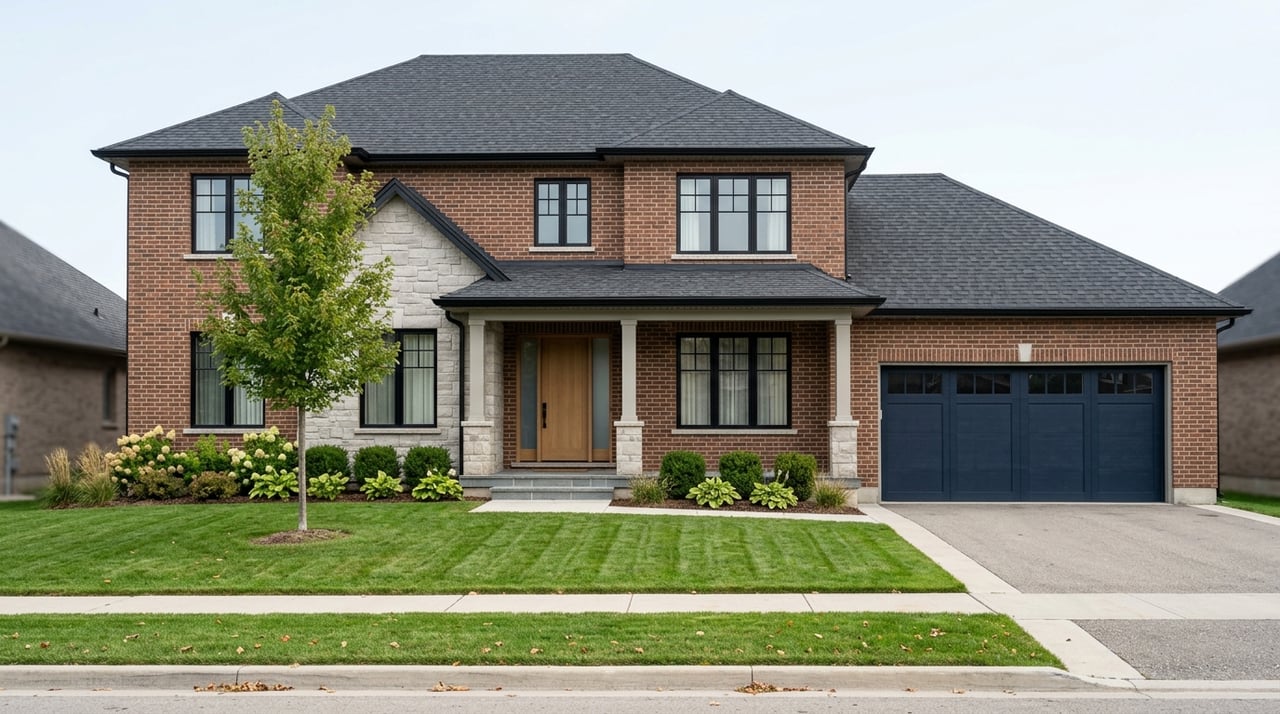
Your Guide to Relocating to Cranberry Township
June 25, 2026
June 25, 2026
Moving to a new area can feel simple on paper and complicated in real life. You may know you want North Pittsburgh access, a manageable commute, and a home that fits your daily routine, but narrowing down the right suburb takes more than a quick map search. If Cranberry Township is on your list, this guide will help you understand how it lives, what the housing options look like, and what to check before you make a move. Let’s dive in.
Cranberry Township sits in the southwestern corner of Butler County and functions as a major hub for the North Pittsburgh area. It covers 23.69 square miles and sits at the intersection of I-76, I-79, and Routes 19 and 228, which gives you strong regional access in several directions.
That location is a big reason many buyers consider Cranberry during a relocation. The township notes that travel between Cranberry and Pittsburgh is less than half an hour, and the Census reports a mean travel time to work of 27.1 minutes. If your routine depends on highway access and flexibility, Cranberry often checks that box.
It is also a growing community. Population estimates increased from 33,096 in 2020 to 35,244 in 2025, which reflects continued demand for the area. Cranberry is often viewed as a suburb, but its size, job base, and services make it feel more like a regional suburban center than a bedroom community.
If you are looking for a suburban setting with room to spread out, Cranberry Township may feel like a strong fit. The area tends to appeal to buyers who want convenience, organized amenities, and a location that supports both work and home life.
At the same time, it helps to be realistic about the layout. Cranberry is better suited to households that are comfortable driving, since the commute pattern is largely car-oriented. If your priority is dense walkability or a transit-first lifestyle, you may want to weigh that carefully.
One of Cranberry’s biggest advantages is that it is not only a place people live. It is also a major employment center. Township market information says Cranberry has more than 20,500 jobs and more than 1,000 businesses, and that more people commute into Cranberry for work than commute out.
That matters if you are relocating for a job in the North Pittsburgh area or want to stay close to business hubs. It can also help if your household needs access to multiple commute routes rather than a single destination. For many buyers, that kind of flexibility becomes a major quality-of-life factor after the move.
Cranberry’s housing stock is more varied than some buyers expect. Single-family homes remain the backbone of the market, but township planning documents also note more attached homes, townhomes or rowhouses, and multi-family buildings in recent development.
That mix can be helpful if you are moving at a transition point. You may be looking for a detached home with more space, a lower-maintenance townhome, or a temporary rental while you learn the area. Cranberry gives you more than one path.
A few local data points help frame the market:
Because these numbers come from different sources and time frames, it is best to treat them as directional rather than identical. The bigger takeaway is that Cranberry remains competitive, and your experience may vary depending on whether you are targeting a single-family home, a townhome, or another property type.
If you are relocating into Cranberry, preparation matters. A market where homes can go pending quickly usually rewards buyers who have clear priorities, realistic price expectations, and a plan for acting when the right home appears.
This is especially true if you are balancing a move from out of town. You may need to compare commute patterns, property styles, and neighborhood locations in a short window. In that setting, clear guidance and efficient touring strategy can make the process feel much more manageable.
Cranberry offers a broad range of township-run amenities, which is one reason it continues to attract relocation buyers. The parks and facilities list includes the Municipal Center and Armstrong Great Lawn, Community Park, Graham Park sports complex, North Boundary Park, Cranberry Highlands Golf Course, and Powell Farm.
The Municipal Center is a notable everyday resource. It houses Township Administration, police, the Cranberry Public Library, the Early Learning Center, and indoor walking space. Having several civic services in one place can make a new community easier to navigate when you first arrive.
North Boundary Park adds another strong recreation option. It includes an 18-hole championship disc golf course and the Cranberry Township Waterpark, which features a 17,500-square-foot pool, eight full-size swimming lanes, splash pads, water slides, a climbing wall, and other recreation features.
The township also hosts the Town Square Market on Fridays from late May through early September. The market includes farm-fresh produce, crafts, and artisanal goods, which adds another local routine many residents enjoy during warmer months.
Many relocating buyers ask about school access early in the process. Families moving to Cranberry often look to Seneca Valley School District, which serves Cranberry, Forward, Jackson, and Lancaster townships along with several boroughs.
District materials state that Seneca Valley covers 100 square miles. They also note that Cranberry Township contains four elementary schools and two middle-elementary schools, while the secondary campus is in Jackson Township. Since attendance can depend on the specific property address, it is important to verify the assigned school boundary before you buy.
For healthcare, UPMC Passavant-Cranberry is located near the I-79 and Pennsylvania Turnpike interchange. The campus includes a 33-bed hospital and provides 24/7 emergency care. For many buyers, having that nearby is an important part of day-to-day confidence in a new area.
When you relocate, practical details matter just as much as home style. Cranberry Township says it provides water, sewer, and residential solid waste disposal services, while investor-owned utilities provide gas, electric, and communications.
That can make the setup process more straightforward, especially if you are coordinating a move on a tight timeline. It is still wise to confirm utility arrangements for any specific property, but the township service structure is useful context as you plan ahead.
Cranberry often works well for incoming professionals and households who want suburban space, strong road access, and a substantial local amenity base. It can also be a good match if you want choices in housing type instead of a one-format suburb.
In practical terms, Cranberry may be a strong fit if you want:
It may be less appealing if your top priorities are:
Before choosing Cranberry Township, it helps to slow down and confirm the details that affect your everyday life most. The research points to a few especially important checks for out-of-area buyers.
Start with your actual commute route, not just mileage. A map can suggest one thing, but your real drive pattern may depend on which part of Cranberry you choose and where you need to go each day.
Next, verify the school boundary for any address you are seriously considering. Even if you are familiar with the district name, school assignment should always be confirmed at the property level.
Finally, compare current market conditions for the type of home you want. Cranberry supports several housing types, and broad averages do not always tell the full story of your specific segment.
A smooth relocation usually comes down to matching the right home, the right location inside the township, and the right strategy for the current market. That is where local guidance can save you time and help you make a more confident decision.
If you are planning a move to Cranberry Township or comparing North Pittsburgh suburbs, Emily Wilhelm offers calm, detail-driven guidance, clear communication, and local insight to help you move with confidence.
Stay up to date on the latest real estate trends.
Emily brings a lifetime’s worth of market knowledge and valuable insight into local school districts, property values, neighborhoods, and subdivisions. This provides her clients with helpful guidance pertaining to Franklin Park, North Hills, Marshall, Bradford Woods, Richland, Pittsburgh and the surrounding communities.